
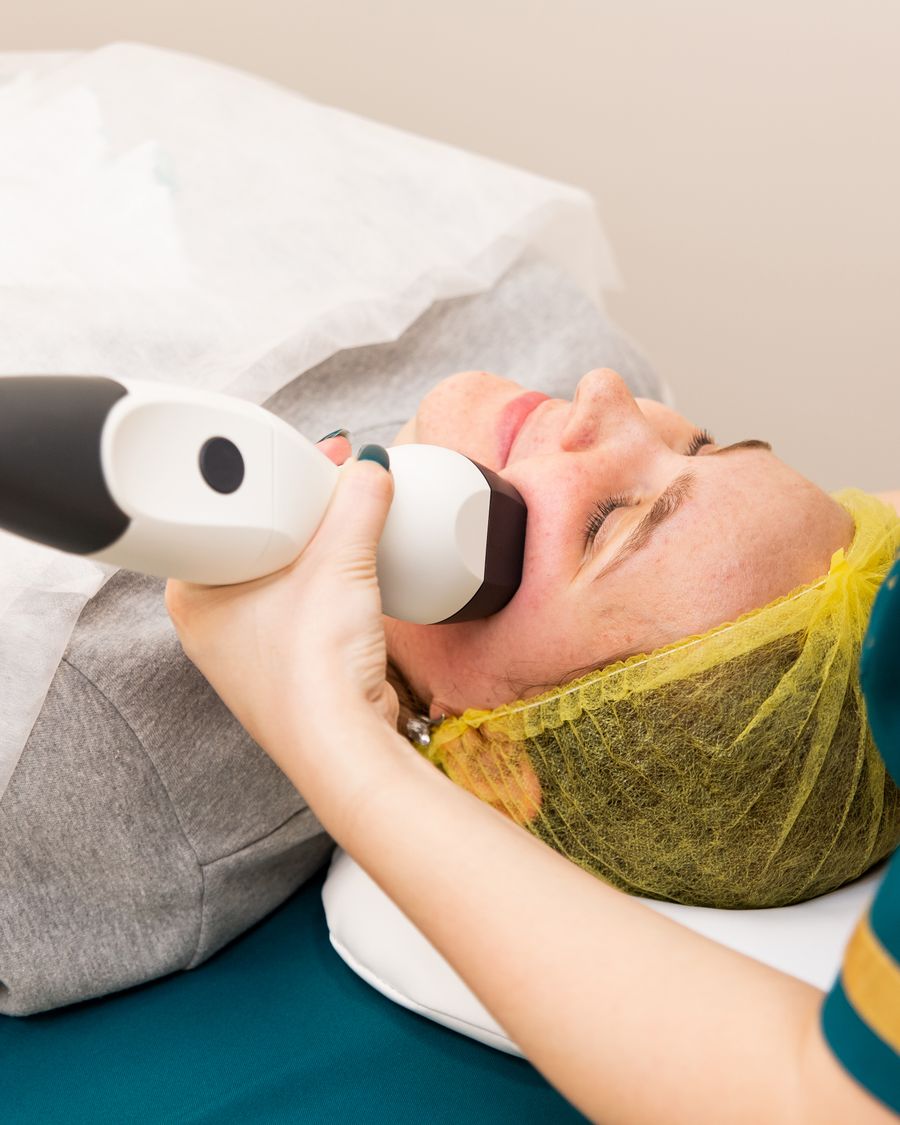
What is Tuneface lifting?
Tuneface is a radiofrequency lifting treatment. Radiofrequency energy meets resistance as it passes through tissue, and that resistance turns into heat. When the dermis and the tissue just under it reach a controlled therapeutic temperature, collagen fibres tighten and the skin is prompted to produce new collagen over the following weeks.
What makes Tuneface feel different from some other RF treatments is the delivery. Instead of single, stamped pulses, the handpiece moves continuously across the skin while the surface is cooled. Heat builds gradually and evenly, so most patients describe a warm, massage-like sensation rather than sharp heat spikes. That is why it is usually done without numbing cream and with no waiting time beforehand.
People usually ask about Tuneface for:
- Early softening of the jawline and lower cheeks
- Skin that looks a little tired and less springy than before
- Loose skin under the chin and on the neck
- Regular, low-downtime maintenance between bigger lifting treatments

How Tuneface compares with other lifting treatments
No single device suits every face. The doctor chooses based on how much laxity you have, where it is, your skin thickness and how much time you have in Seoul. This overview shows where Tuneface sits:
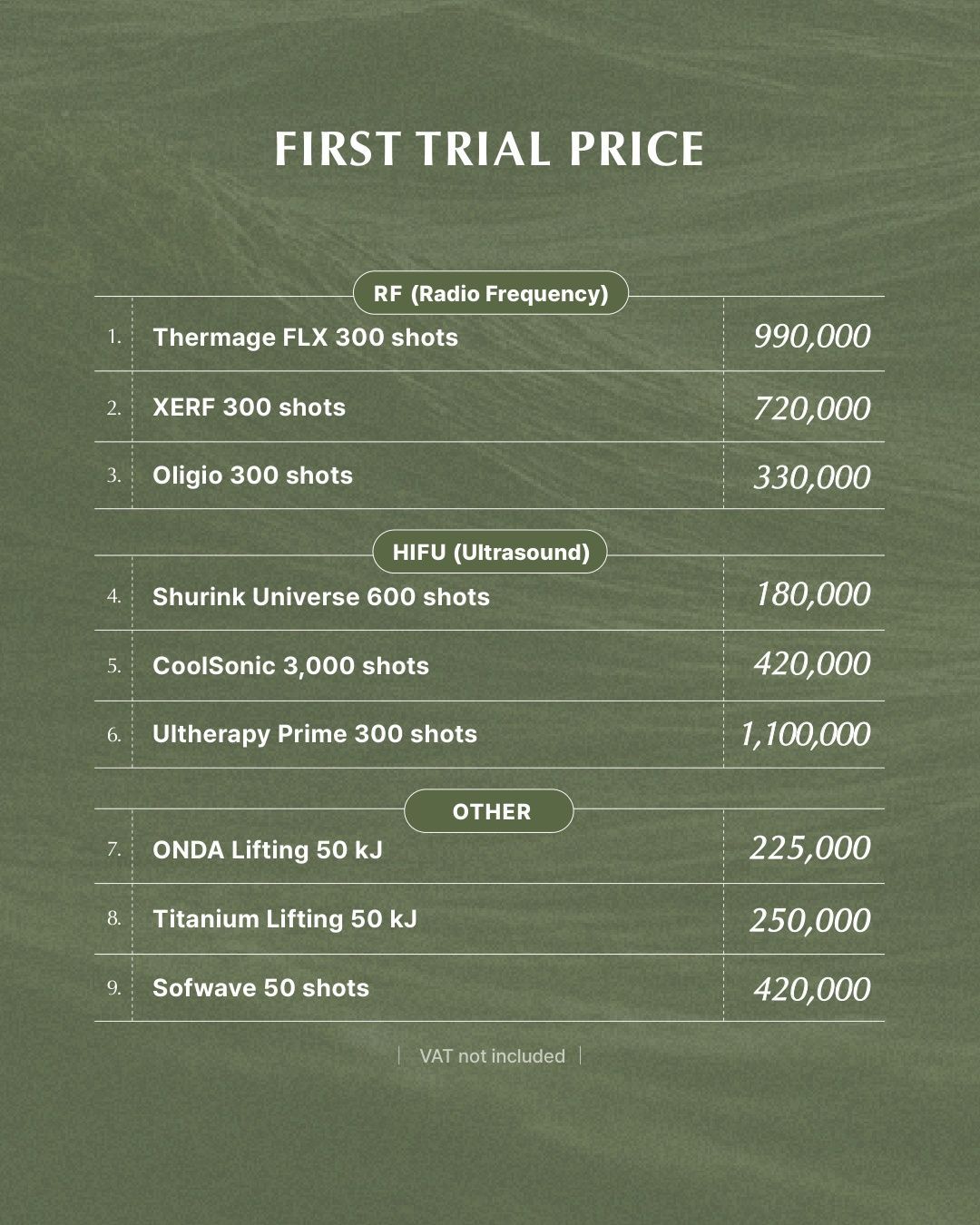
| Treatment | Energy | Main strength | From |
|---|---|---|---|
| Tuneface | Radiofrequency, gliding | Comfortable, even tightening; no numbing | Consultation |
| Thermage | Monopolar RF, pulsed | Single-session tightening, incl. eyelids | ₩890,000 |
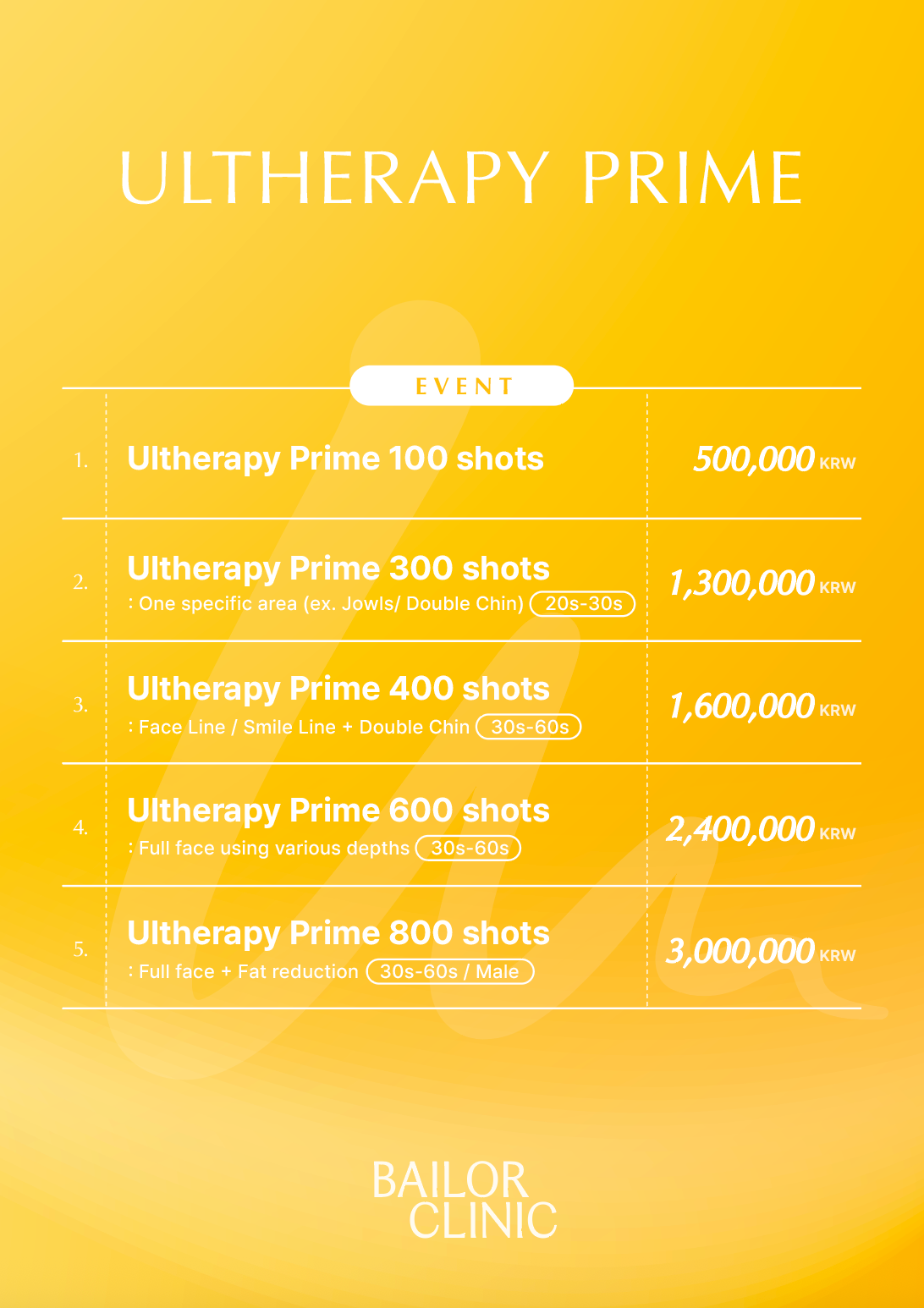
| Ultherapy | Micro-focused ultrasound with imaging | Deeper lift along the jaw | ₩500,000 |
| Titanium | Diode laser lifting | Quick lift and glow with no downtime | ₩150,000 |
| Onda | Microwave | Contour, soft fullness along the jaw | ₩120,000 |
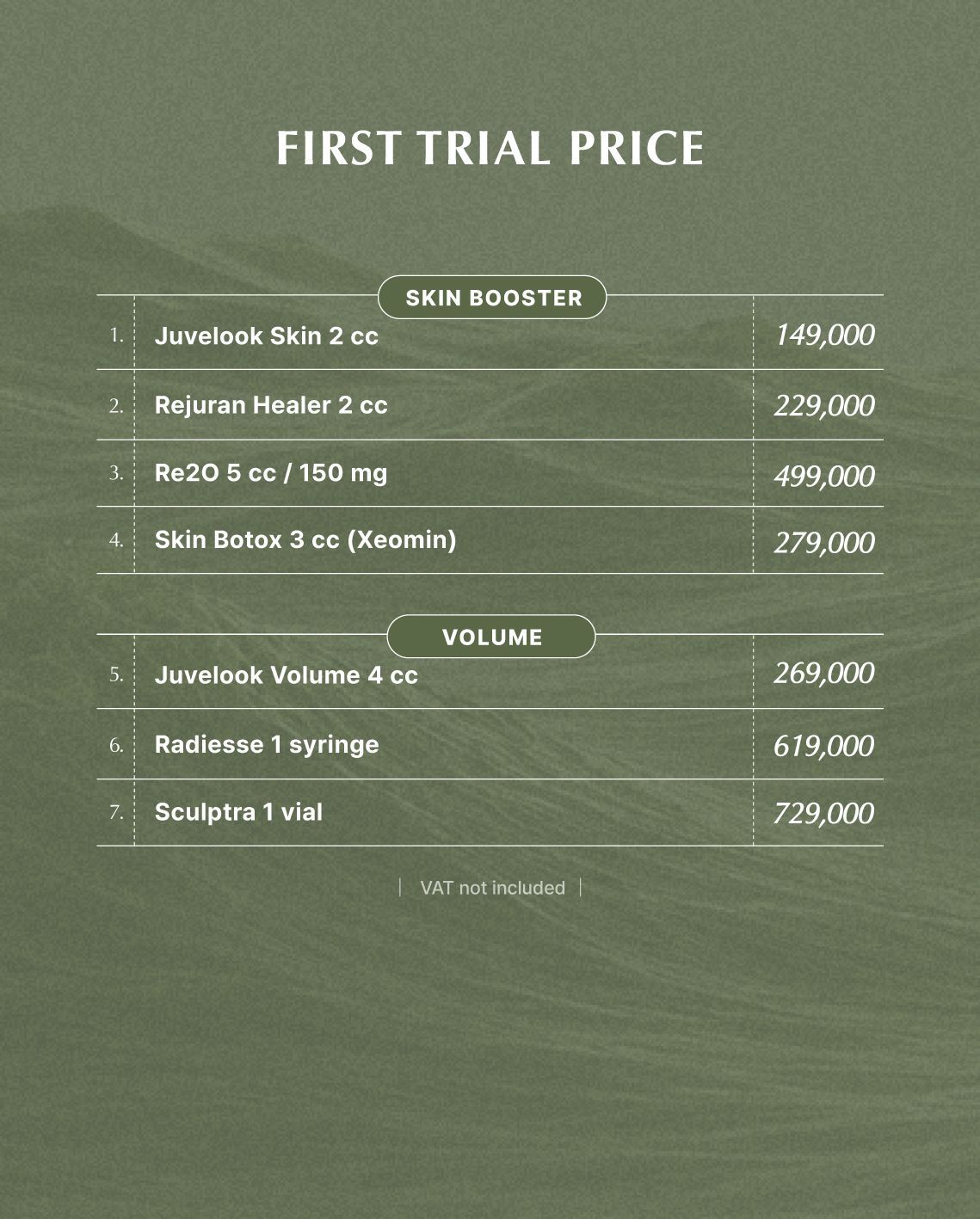
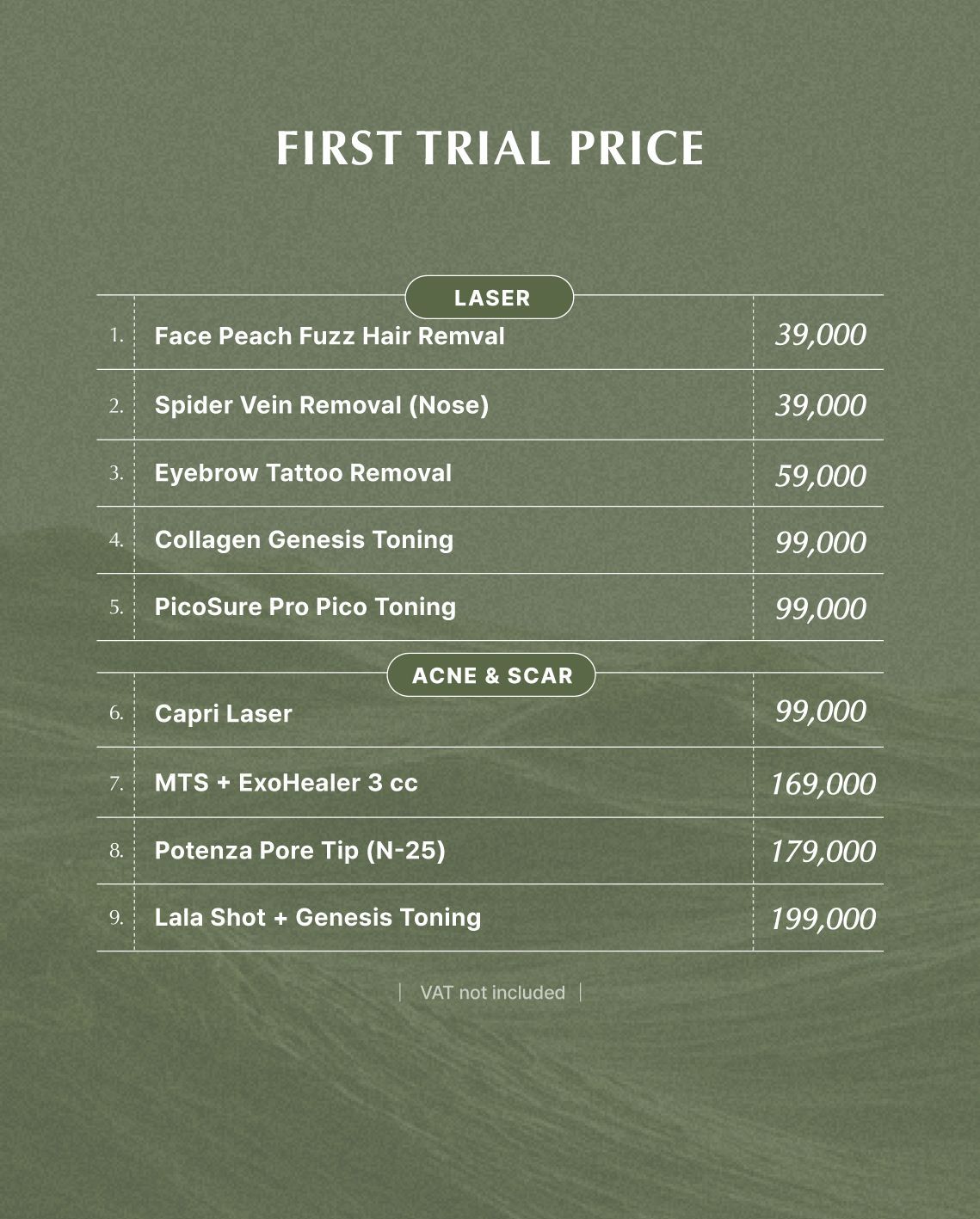
Prices in KRW, 10% VAT not included, updated September 2026. Tuneface is priced after consultation; see the full price list for all lifting devices.
When Tuneface makes sense
Tuneface is a good fit if you are sensitive to pain, do not want to wait for numbing, or prefer a gentle course over one intensive session. For marked sagging or heavy jowls, the doctor may suggest a stronger device or a combination — for example Tuneface for skin quality alongside thread lifting for mechanical lift. If your main concern is pores or texture rather than laxity, Potenza may be more useful.
What changes after Tuneface
Right after treatment the skin often looks a little brighter and feels tighter. The real change is gradual: over 1–3 months, many patients notice a cleaner jawline and springier cheeks. Results are subtle and cumulative, so Tuneface is usually planned as maintenance — see our skin tightening guide for how it fits with other options.

How a Tuneface visit works
- Doctor consultation We check laxity, skin thickness and any implants or fillers, then decide areas and the number of sessions.
- Cleansing Makeup is removed and a conductive gel is applied. Numbing cream is usually not needed.
- Treatment The cooled handpiece glides over each zone for about 20–40 minutes, guided by your comfort feedback.
- Calming care The gel is cleaned off and soothing care applied; you can usually go straight back to your day.
Because there is no numbing time and little visible redness, Tuneface fits easily into a busy schedule in Seoul, including the day before a flight. If you are planning a course, we can space sessions around your stay and suggest how to continue at home. Some patients add a skin booster on the same day for hydration; the doctor will advise the order.
Downtime, side effects and who should not have Tuneface
Radiofrequency lifting is generally well tolerated, but it is a medical treatment and the doctor sets energy for your skin:
- Common: warmth and pink flushing for up to a couple of hours, and a feeling of slight tightness that evening.
- Less common: mild swelling or tenderness along the jaw for a day or two, and temporary dryness.
- Rare: superficial burns or blisters, and pigment changes after a burn, particularly on tanned skin.
Tell the doctor first, or avoid treatment, if you
- Have a pacemaker or another implanted electronic device
- Are pregnant or breastfeeding
- Have metal implants, recent fillers or threads in the treatment area
- Have active acne cysts, infection, cold sores or a recent sunburn
- Take medication that affects healing or makes skin more sensitive
Afterwards, avoid saunas and very hot baths for a day or two, keep skin moisturised and use daily SPF. If you notice blistering or unusual pain, message us on WhatsApp with a photo.

Dr. Jimin Kang, Medical Director
Every tuneface plan at Bailor starts with a face-to-face skin assessment by a doctor — not a sales counsellor. Dr. Kang's approach is "tailored, not templated": she chooses the product, dose and depth for your skin, and treats you herself or works alongside the other doctors on our in-house medical team.
Tuneface FAQ
How much does Tuneface cost at Bailor?
Tuneface pricing is confirmed after a doctor consultation, depending on the areas and number of sessions. Other lifting devices start from ₩150,000 (Titanium 10KJ), VAT excluded — see the full price list.
Does Tuneface hurt?
Most people feel steady warmth rather than pain, because the handpiece moves continuously with surface cooling. Numbing cream is usually not needed, and the doctor adjusts energy if any area feels too hot.
How many Tuneface sessions do I need?
Many patients do 2–4 sessions a few weeks apart and then maintenance every few months. A single session can still give a fresher, tighter feel if you are only in Seoul briefly.
Tuneface or Thermage — which is better?
They are both radiofrequency treatments but are used differently. Thermage is a single, more intensive session that can include the eyelids; Tuneface is gentler and usually done as a course. The doctor recommends one based on your laxity and schedule.
Is there any downtime?
Usually very little. Mild redness typically fades within a couple of hours, and makeup can generally be applied the same day.
Can I have Tuneface if I have filler or threads?
Tell the doctor about any filler or threads and when they were placed. Treatment may still be possible with adjusted settings or timing.