

What is a thread lift?
A thread lift is a minimally invasive way to reposition soft tissue that has started to slide down with age. The doctor inserts fine threads made of PDO (polydioxanone) — a material long used in dissolvable surgical sutures — through tiny entry points. Cogged threads grip the tissue so it can be lifted and anchored in a new position.
Over the following months the threads slowly dissolve. As they do, the body lays down collagen around them, which helps the skin feel firmer even after the threads themselves are gone.
Thread lifting is usually considered for:
- Early jowls and a softening jawline
- Flattening mid-cheeks and deepening nasolabial folds
- Drooping outer brows and forehead lines
- Horizontal neck lines and mild neck laxity
It is not a replacement for a surgical facelift. If skin laxity is advanced, the doctor will tell you honestly what threads can and cannot do.
Threads, devices or both?
Lifting at Bailor can be done with threads, with energy devices, or with a combination. The right choice depends on how much tissue has moved, how thick your skin is and how much downtime you can accept.
| Option | How it works | Good for | From |
|---|---|---|---|
| Neck wrinkle thread | Fine threads under each line | Horizontal neck lines | ₩200,000 (1 line) |
| Forehead wrinkle thread | Threads along forehead lines | Static forehead lines | ₩250,000 (1 line) |
| Forehead Mint Thread (8) | Cogged PDO threads, brow lift | Heavy brows, hooded look | ₩900,000 |
| Full Face Mint Thread (8 / 16) | Cogged PDO threads, mid and lower face | Jowls, cheeks, jawline | ₩1,200,000 / ₩1,900,000 |
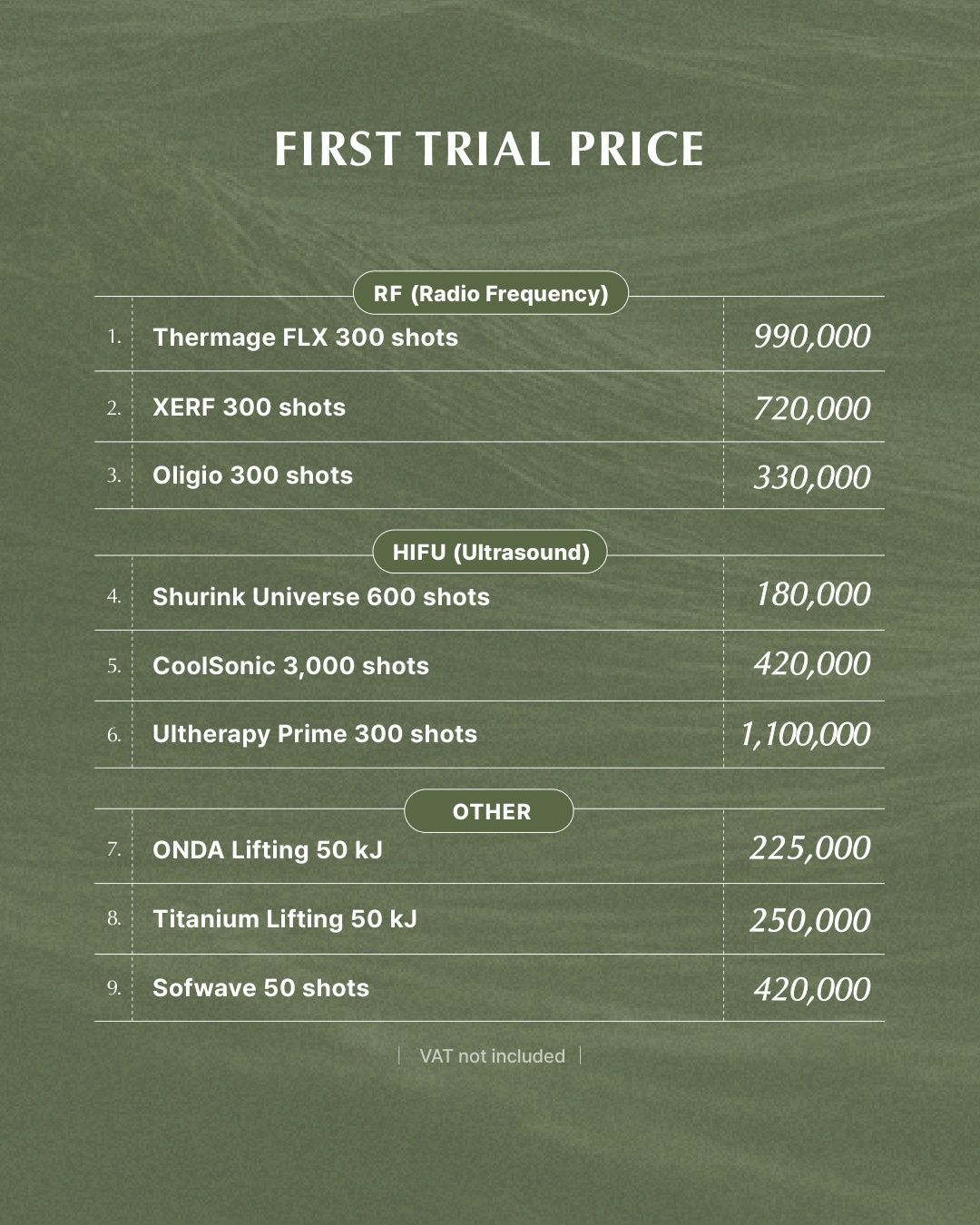
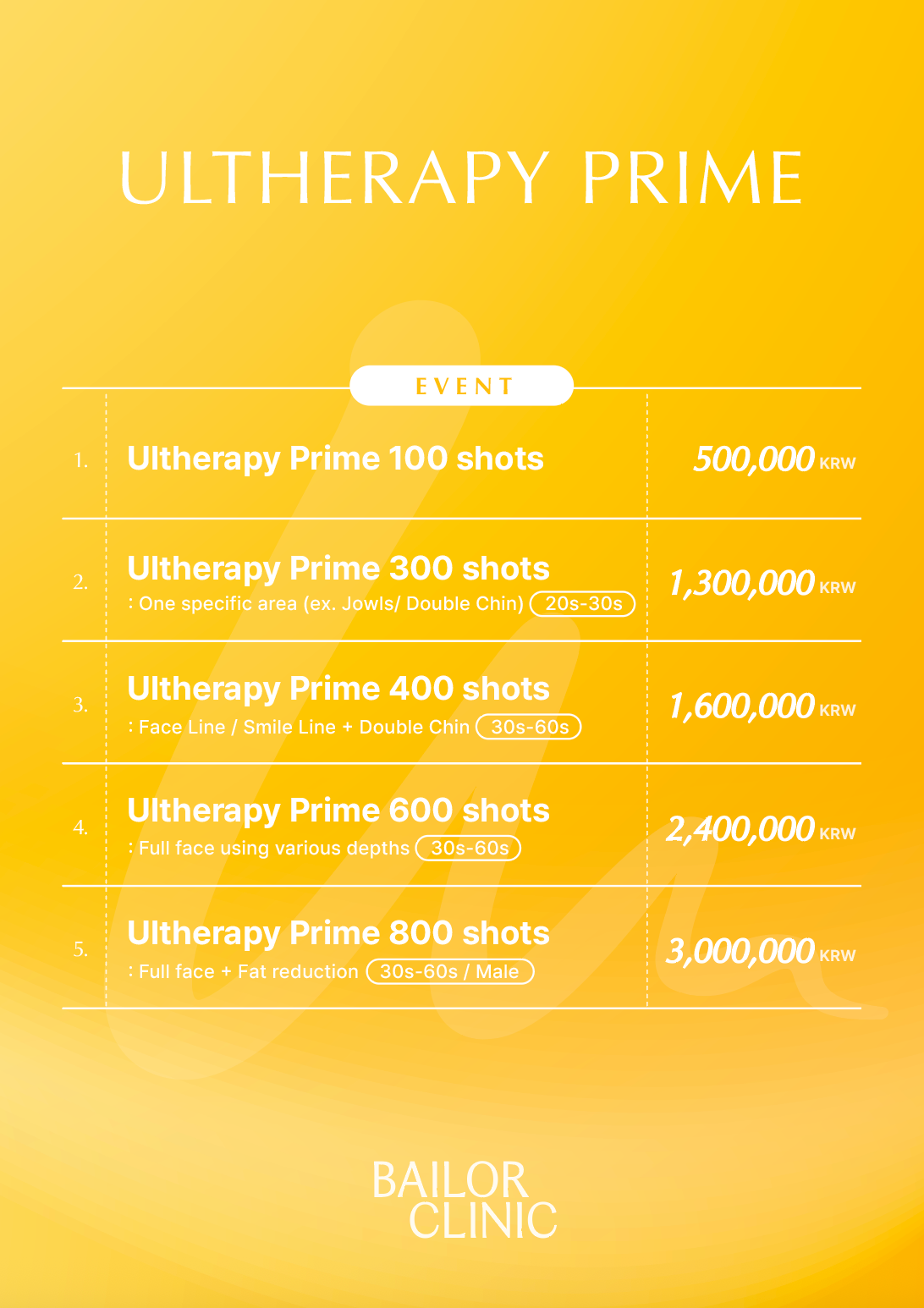
| Ultherapy | Micro-focused ultrasound with imaging | Tightening without incisions | ₩500,000 |
| Thermage | Monopolar radiofrequency | Overall skin firmness | ₩1,000,000 |
Prices in KRW, 10% VAT not included, updated September 2026. See the full thread lift price list.
Threads give a more visible repositioning straight away; devices such as HIFU lifting work more gradually with very little downtime. Many patients do a device treatment first and add threads where extra lift is needed.
What changes after a thread lift
The lift is visible straight away but can look slightly over-corrected while swelling is present. Over 2–4 weeks the face settles into a more natural position. Results typically last around 6–12 months, depending on age, skin quality and lifestyle. Pairing threads with a skin tightening device can help the result look smoother.
How a thread lift visit works
- Doctor consultation We assess laxity, fat and skin thickness, then mark lift directions while you sit upright.
- Anaesthesia Numbing cream plus local anaesthetic at the entry and exit points.
- Thread placement Threads are inserted with a cannula, tensioned and trimmed; usually 30–60 minutes.
- Check & aftercare Symmetry check, cooling and written aftercare; a review visit after about 2 weeks.
If you are visiting from abroad, allow about a week in Seoul after a full-face thread lift so swelling settles and the doctor can see you again before you fly. Smaller treatments, such as neck line threads, need less time. Ask us on WhatsApp before booking if your stay is short.
Downtime, side effects and aftercare
Threads are placed with needles and cannulas, not incisions, but this is still a medical procedure with real recovery.
- Common: swelling, tenderness and a tight feeling for 3–7 days; bruising that makeup can usually cover; mild puckering near entry points that typically settles within 1–2 weeks.
- Less common: dimpling that lasts longer, asymmetry, discomfort when chewing or opening the mouth wide, or a thread end felt under the skin.
- Rare: infection, a thread working its way out and needing removal, or temporary nerve irritation.
Who should wait or tell the doctor first
Threads are not done during pregnancy or breastfeeding, or with an active skin infection near the area, and some autoimmune or bleeding conditions need caution. Tell us about blood thinners, previous fillers or facial surgery, and any allergies.
Aftercare
Sleep on your back for the first few nights, avoid facial massage, saunas, hard workouts and dental treatment for 2–4 weeks, and do not rub the face hard when cleansing. Message us with a photo if anything feels wrong — a doctor will review it.

Dr. Jimin Kang, Medical Director
Every thread lift plan at Bailor starts with a face-to-face skin assessment by a doctor — not a sales counsellor. Dr. Kang's approach is "tailored, not templated": she chooses the product, dose and depth for your skin, and treats you herself or works alongside the other doctors on our in-house medical team.
Thread lift FAQ
How much does a thread lift cost in Gangnam?
At Bailor Clinic in Sinsa, neck line threads start from ₩200,000 per line, Forehead Mint Thread (8 threads) is ₩900,000 and Full Face Mint Thread is ₩1,200,000 for 8 threads or ₩1,900,000 for 16, VAT excluded. See the thread lift price list.
How long does a thread lift last?
Results typically last around 6–12 months. The PDO threads dissolve over several months, but the collagen formed around them helps maintain some firmness afterwards.
Does a thread lift hurt?
Local anaesthetic is used at the insertion points, so most patients feel pressure and tugging rather than sharp pain. Some soreness for a few days afterwards is normal.
When can I go back to work?
Many people return to desk work after 2–3 days. Bruising and swelling vary, so plan about a week before important photos or events.
Is a thread lift the same as a facelift?
No. A thread lift is non-surgical and gives a moderate, temporary lift. Surgery is more suitable for heavy, advanced sagging. The doctor will explain which group you fall into.
Can threads be combined with Ultherapy or Thermage?
Yes, and this is common. The doctor will advise the order and timing, often doing the device treatment first and threads afterwards.