

What is a Korean facial?
In Korea, many people visit a skin clinic for facials as routinely as others visit a hairdresser. A Korean clinic facial is layered: several short steps, each with a clear purpose, built around the condition of your skin that day. Compared with a typical spa facial, it uses more medical-grade exfoliants and devices, and it is chosen with a doctor's input.
A typical Korean facial at Bailor may include:
- Double cleansing and skin check
- Gentle exfoliation or a mild peel, such as a LHALA peel
- Extractions for blackheads or congested pores, only where needed
- Device care, such as Aqua Peel, LED or LDM ultrasound
- A targeted mask and calming finish with sunscreen
It is a good choice when you want visible freshness without downtime — before an event, after a long flight, or as a first, gentle step before stronger treatments.
What changes after a Korean facial
Most people leave with skin that looks cleaner, calmer and more hydrated. Regular facials every 2–4 weeks help keep pores clearer over time. For deeper concerns such as enlarged pores or scarring, facials work best combined with targeted treatments.
How a Korean facial visit works
- Skin check A doctor looks at oiliness, congestion, redness and hydration, then chooses the facial.
- Cleanse & prep Double cleansing and gentle exfoliation or peel suited to your skin.
- Targeted care Extractions if needed, then device care and a treatment mask.
- Calm & protect Soothing products and sunscreen; you can go straight back out into Seoul.
Facials are a gentle way to start a trip, especially after a long flight. They can also prepare the skin for treatments later in your stay. Tell us your dates and we will suggest a sequence that keeps your skin comfortable.
Why a doctor chooses the facial
Skin changes from week to week with weather, travel, stress and hormones. A facial that suits oily, congested skin in summer can be too strong for the same skin after a dry winter flight. Choosing the facial on the day, after a quick look by a doctor, keeps the treatment effective and lowers the chance of irritation. It also means we can tell you honestly when a facial is not enough and a targeted treatment, such as laser toning or a booster, would help more.
Downtime, side effects and aftercare
Facials are low-risk, but exfoliation and extractions can still irritate some skin types.
- Common: mild redness or warmth for a few hours, especially after extractions; small red marks where pores were cleared.
- Less common: a few small breakouts in the following days as congestion surfaces; dryness or tightness after a peel.
- Rare: an allergic or irritant reaction to a product, or temporary darker marks after extractions in pigment-prone skin.
Who should wait or tell the doctor first
Tell us if you are pregnant or breastfeeding (some peels are avoided), use isotretinoin or prescription retinoids, have active cold sores, eczema or broken skin, or have allergies to cosmetic ingredients. Recent lasers or injections may change which steps are safe.
Aftercare
Use a gentle cleanser, moisturiser and sunscreen for 1–2 days. Avoid scrubs, strong acids and saunas the same day, and do not pick at the skin.

Dr. Jimin Kang, Medical Director
Every Korean facial plan at Bailor starts with a face-to-face skin assessment by a doctor — not a sales counsellor. Dr. Kang's approach is "tailored, not templated": she chooses the product, dose and depth for your skin, and treats you herself or works alongside the other doctors on our in-house medical team.
Korean facial FAQ
How much does a Korean facial cost in Gangnam?
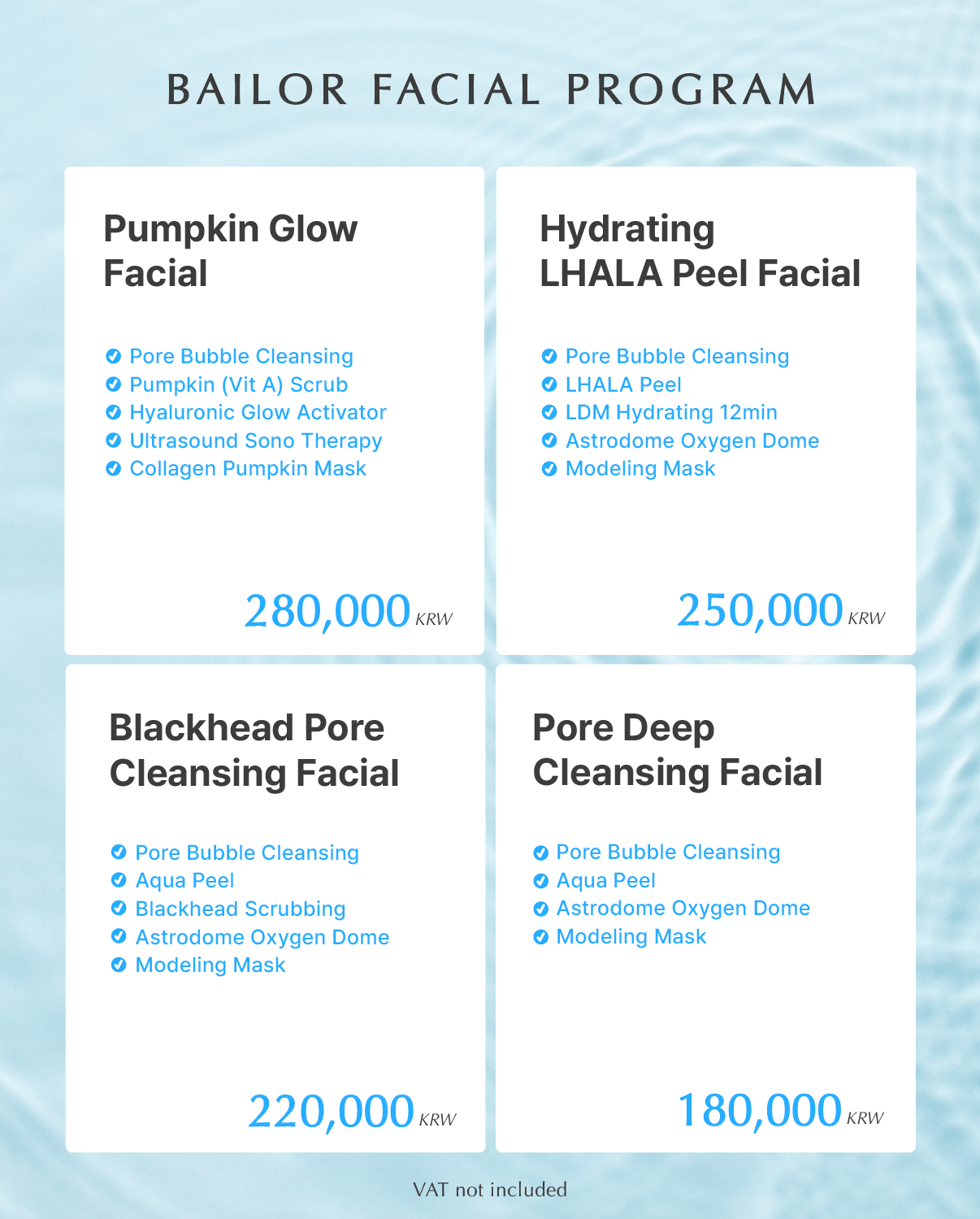
At Bailor Clinic in Sinsa, clinic facials range from ₩180,000 (Acne Facial, Deep Pore Cleansing Facial) to ₩280,000 (Pumpkin Glow, Glow Brightening), VAT excluded. See the facial price list.
How is a clinic facial different from a spa facial?
A clinic facial is chosen with a doctor's input and may use medical-grade peels, extractions and devices. It focuses on skin condition rather than relaxation alone.
Is there downtime after a Korean facial?
Usually none. Mild redness after extractions typically settles within a few hours.
How often should I get a facial?
Many people come every 2–4 weeks, in line with the skin's natural renewal cycle. A single facial before an event is also fine.
Can I get a facial right after arriving in Seoul?
Yes. A hydrating or calming facial is a good way to recover from a long flight.
Can I combine a facial with laser or boosters?
Often yes, though the order matters. The doctor will advise what can be done on the same day.