

Is your skin dehydrated or dry?
The two words are often used interchangeably, but they describe different problems, and the treatment differs:
- Dry skin lacks oil. It is a skin type — often lifelong — that feels rough and flaky and benefits from richer creams.
- Dehydrated skin lacks water. Any skin type, including oily skin, can be dehydrated. It feels tight, looks dull, shows fine crisscross lines and often stings with products it used to tolerate.
Dehydration usually means the barrier — the outer layer of lipids and cells — is letting water escape. Common triggers we see in international visitors are long flights, a change in climate, heated or air-conditioned rooms, over-use of acids or retinoids, and recent laser treatment.
Simply adding hyaluronic acid on top of a damaged barrier gives a short-lived effect. This is the key difference from our dewy complexion plans, which focus on visible sheen; here the goal is skin that feels comfortable all day.

How we treat dehydrated skin at Bailor
A hydration plan usually has a repair step and a hydration step. The doctor decides which needs more emphasis:
| Treatment | Role | Typical plan | From |
|---|---|---|---|
| Aqua Peel | Gentle cleansing without stripping | Every 2–4 weeks | ₩50,000 |
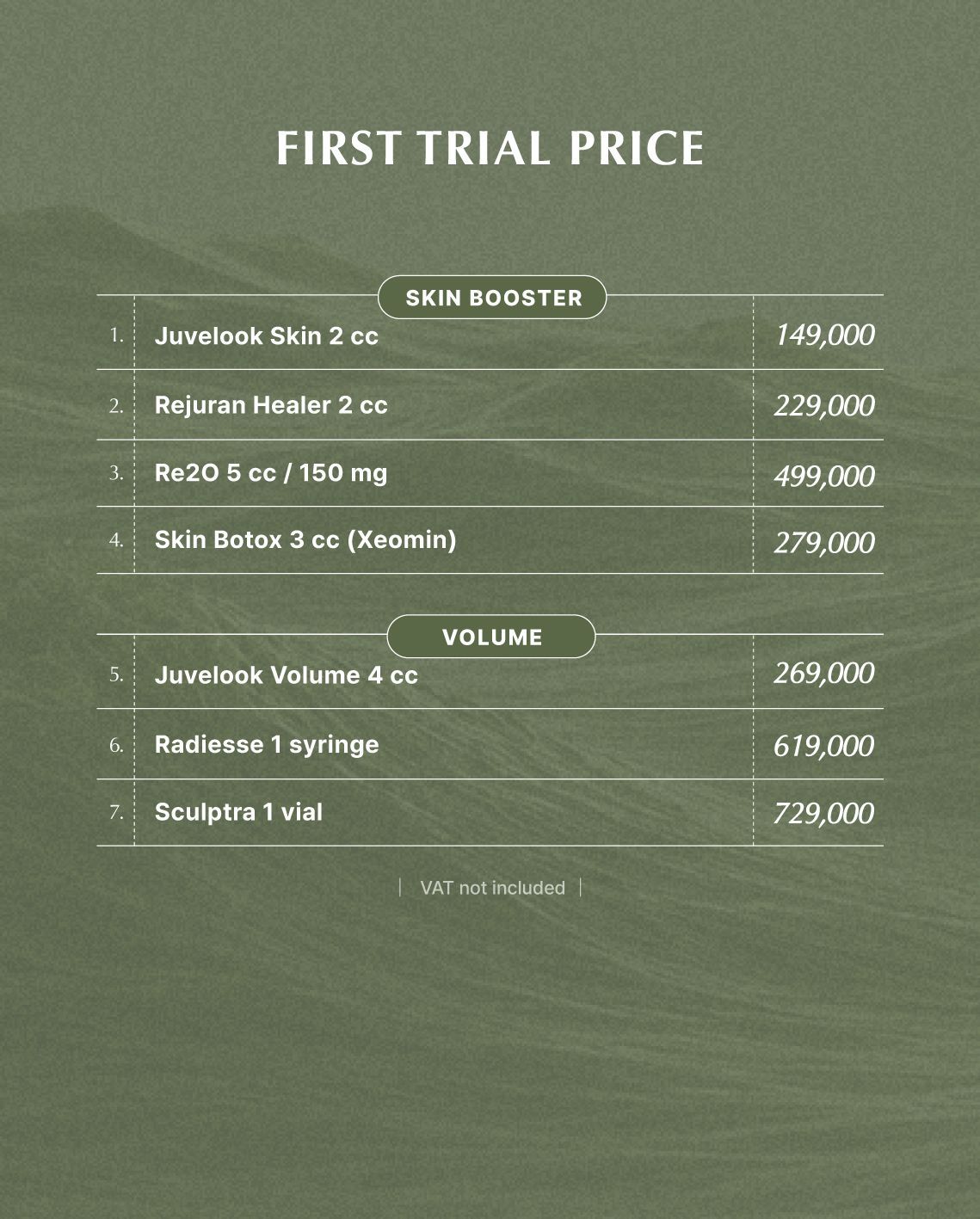
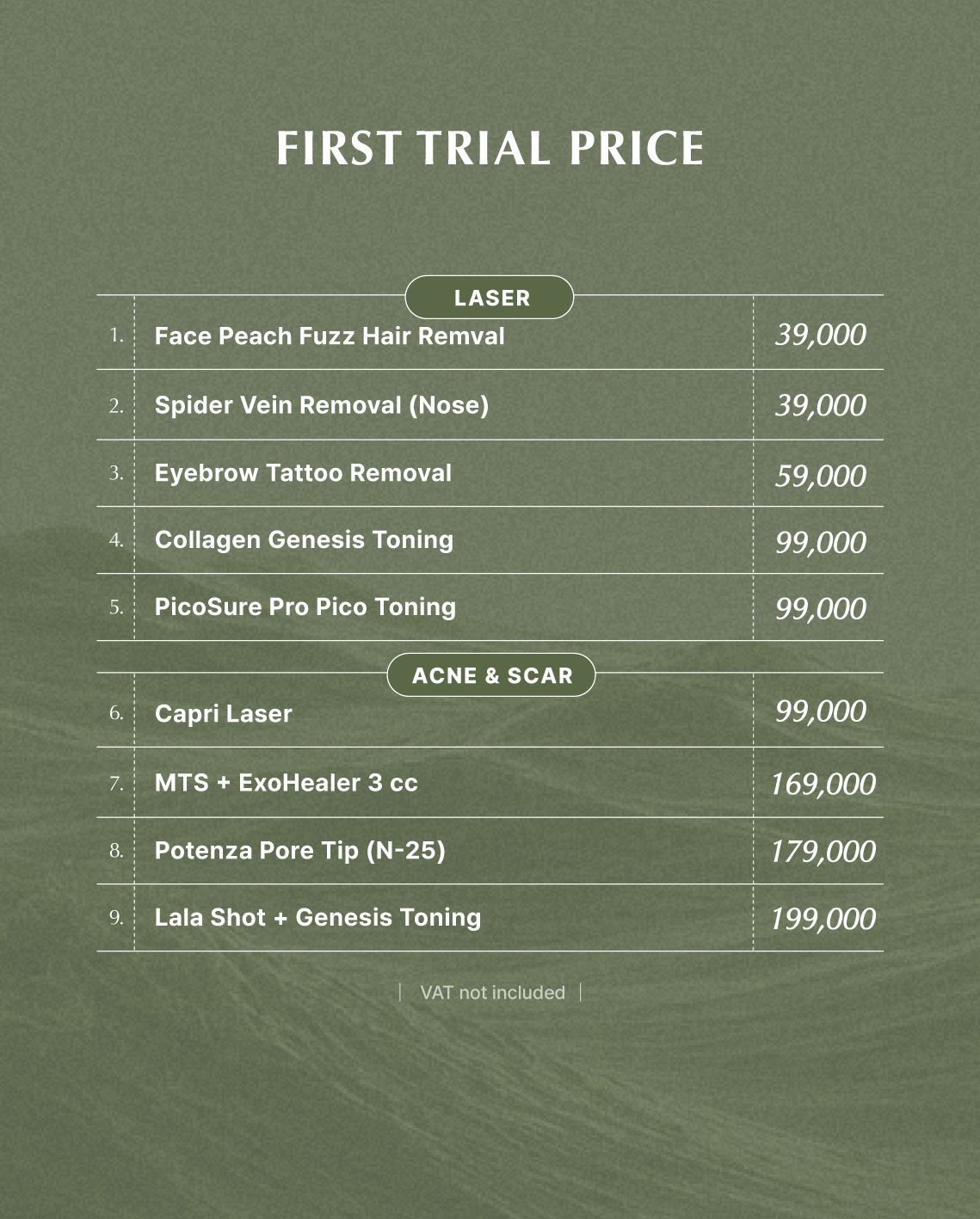
| MTS + PDRN 3cc | Barrier repair, calming | 2–3 sessions (₩149,000 first visit) | ₩250,000 |
| PDRN + HA 5cc | Repair plus water-binding HA | 2–3 sessions, 2–4 weeks apart | ₩300,000 |
| ASCE Exosome 3cc | Recovery after lasers or irritation | 2–3 sessions | ₩300,000 |
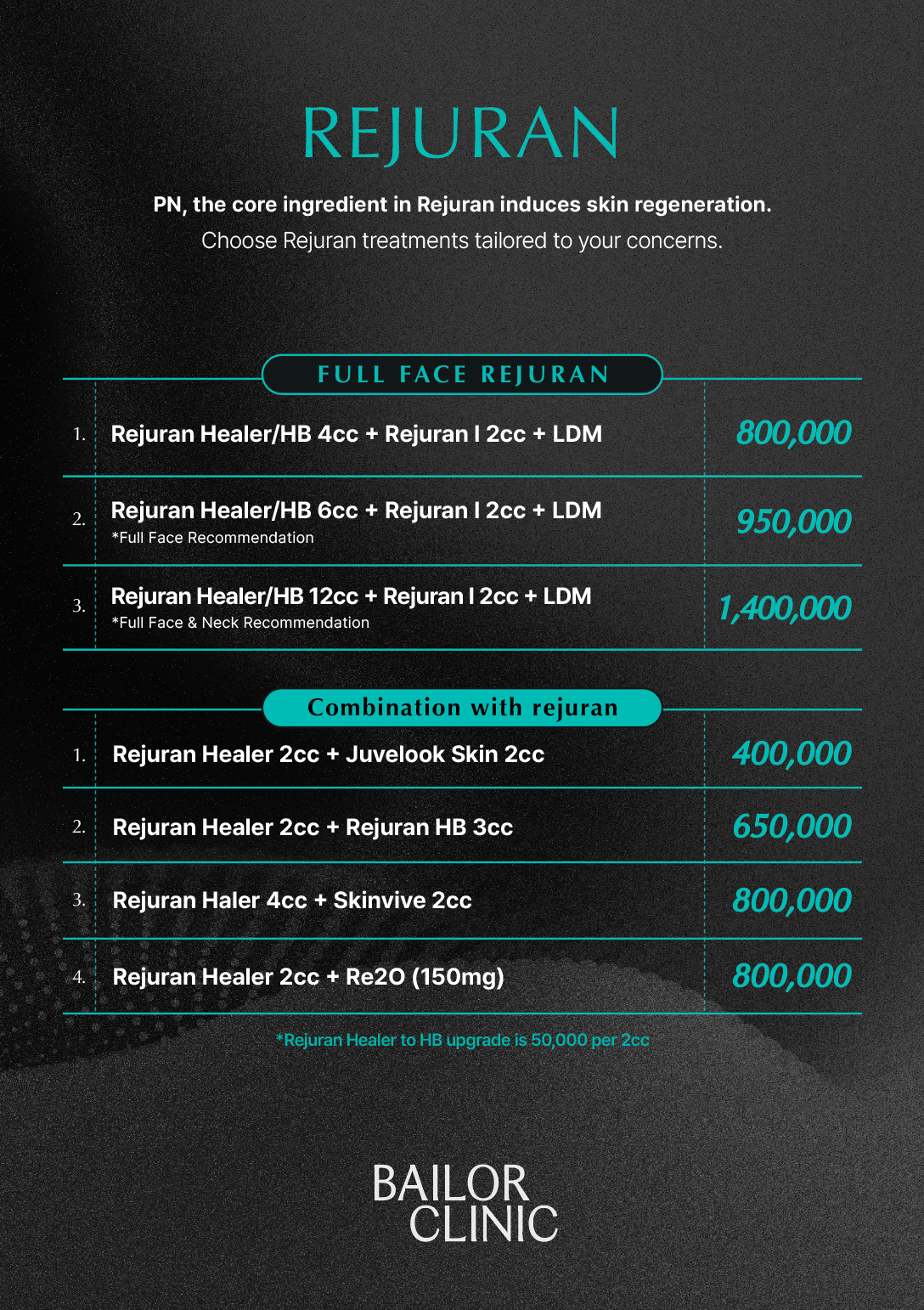
| Rejuran HB 2cc | PN booster with lidocaine for thin, dry skin | 2–3 sessions | ₩350,000 |
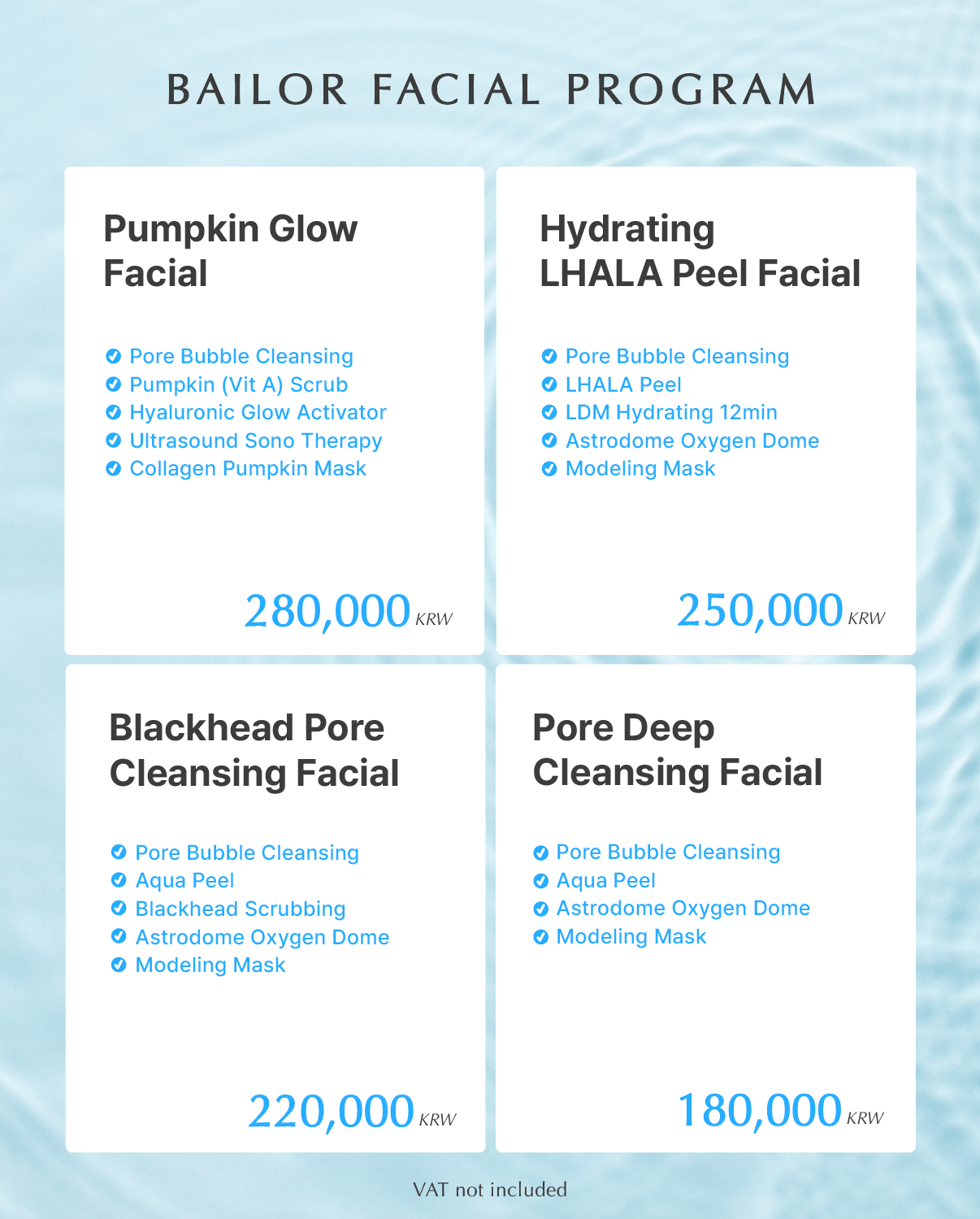
| Hydrating LHALA Peel Facial | Mild renewal with moisture | Monthly | ₩250,000 |
| SkinVive 3cc | Longer-lasting hydration once barrier is healthy | Every ~6 months | ₩600,000 |
Prices in KRW, 10% VAT not included, updated September 2026. See PDRN prices and exosome prices.
Home care matters as much as the clinic visit. The doctor will usually suggest pausing strong actives for a few weeks, using a ceramide-based moisturiser and a gentle cleanser, and keeping indoor air humidified where possible.
What changes in your skin
Many people notice less tightness within 1–2 weeks of the first session. As the barrier strengthens with PDRN or exosome boosters, skin holds moisture more steadily and reacts less to products. Results typically last a few months and hold up best with a gentle home routine.
How a hydration visit works
- Barrier assessment The doctor checks tightness, flaking, sensitivity and your current routine, and rules out conditions such as eczema.
- Gentle cleansing & numbing Skin is cleansed without scrubbing; numbing cream is applied for about 30 minutes.
- Booster delivery PDRN, exosome or Rejuran is delivered by MTS or micro-injection over about 15–30 minutes.
- Soothing & plan Calming mask or LDM, then a simple home routine and timing for the next session.
Arriving in Seoul after a long flight is a common moment for dehydration. A gentle first session in the first days of your trip, followed by a second 2–3 weeks later if your stay allows, usually works better than a stronger single treatment.
Downtime, side effects and aftercare
Hydration treatments are gentle, but compromised skin can react more easily, so we keep plans conservative.
- Common: pinkness for several hours after MTS, small bumps for 1–3 days after injections, mild stinging when applying products the first evening.
- Less common: bruising, temporary flaking, or a small breakout.
- Rare: infection, allergic reaction, or flare of an underlying skin condition.
Tell the doctor first if you
- Are pregnant or breastfeeding
- Have a fish or salmon allergy (PDRN and Rejuran are derived from salmon DNA)
- Have eczema, rosacea or psoriasis on the face, or active infection
- Take blood thinners or have reacted to lidocaine or hyaluronic acid
For 2–3 days, skip saunas, alcohol and exfoliants. Use lukewarm water, a fragrance-free moisturiser and SPF. If stinging lasts more than a day or two, send us a photo on WhatsApp.

Dr. Jimin Kang, Medical Director
Every hydration plan at Bailor starts with a face-to-face skin assessment by a doctor — not a sales counsellor. Dr. Kang's approach is "tailored, not templated": she chooses the product, dose and depth for your skin, and treats you herself or works alongside the other doctors on our in-house medical team.
Hydration FAQ
How much does skin hydration treatment cost at Bailor?
MTS + PDRN 3cc is ₩250,000 (₩149,000 first visit), PDRN + HA 5cc ₩300,000, ASCE Exosome 3cc ₩300,000 and Rejuran HB 2cc ₩350,000, VAT excluded. See PDRN prices.
Why is my skin still tight even though I moisturise?
Often because the barrier is damaged, so water escapes faster than creams can replace it. Repairing the barrier and pausing irritating actives usually helps more than adding thicker products.
Can oily skin be dehydrated?
Yes. Oily skin can feel tight and look dull while still producing oil. Hydration treatments can be used with oil-control steps if needed.
Is PDRN safe if I am allergic to fish?
Please tell the doctor. PDRN and Rejuran are derived from salmon DNA, so the doctor may suggest a different booster such as exosome or hyaluronic acid.
How often should I repeat hydration treatment?
A course of 2–3 sessions, 2–4 weeks apart, is common, then maintenance every 3–6 months or before seasons that dry your skin.
Can I send photos before booking?
Yes. Send photos and a list of your current skincare products on WhatsApp at +82 10-3054-1757.